
Pacing in Comics
Here's a lesson about how pacing works in comics.

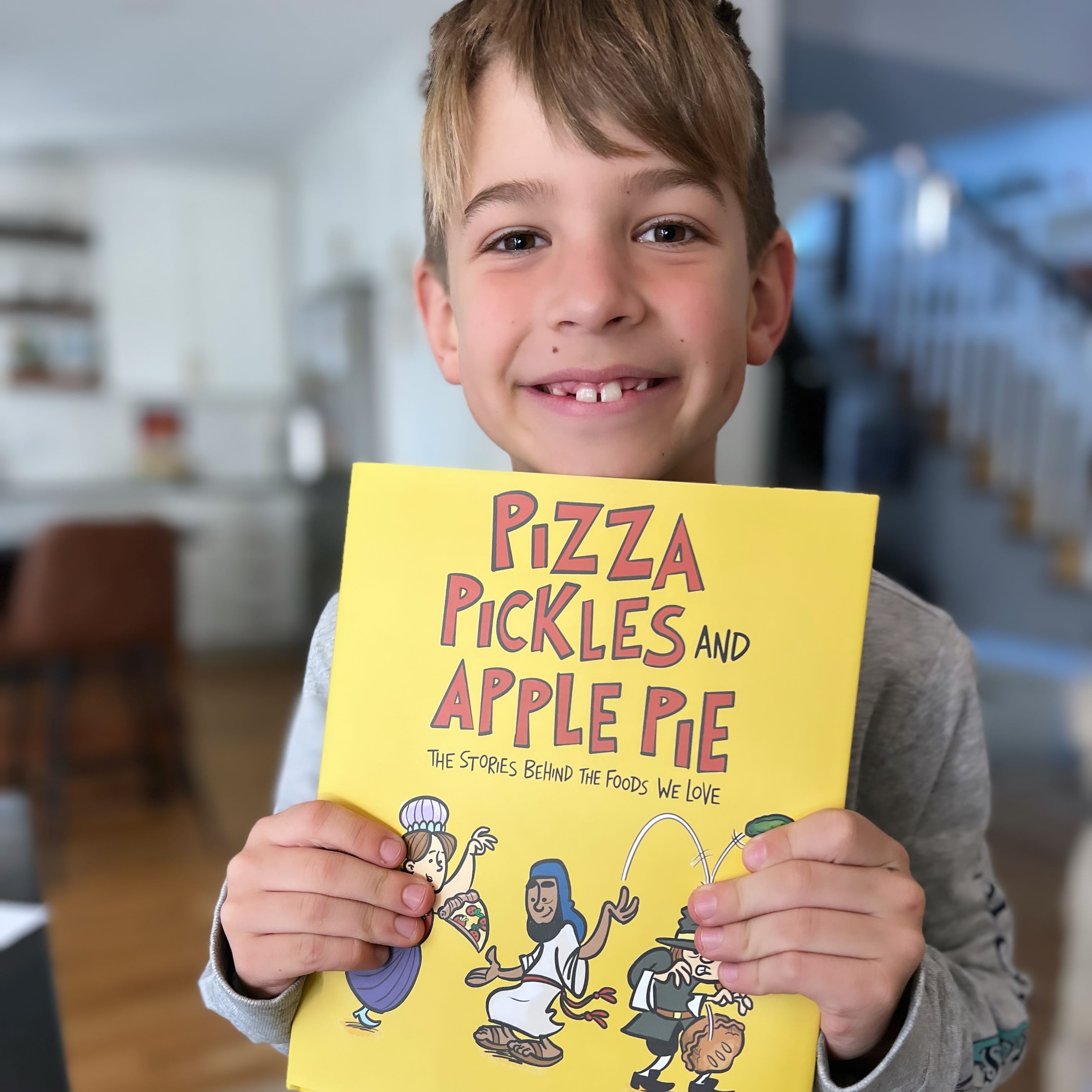
Here’s the perfect Christmas gift for the kid in your life! A copy of either Pizza, Pickles, and Apple Pie or Checkups, Shots, and Robots! You can get either book from any bookstore or also on Amazon! Look at how happy this kid is. Bring some Christmas cheer to your family.
What is Pacing in Comics?
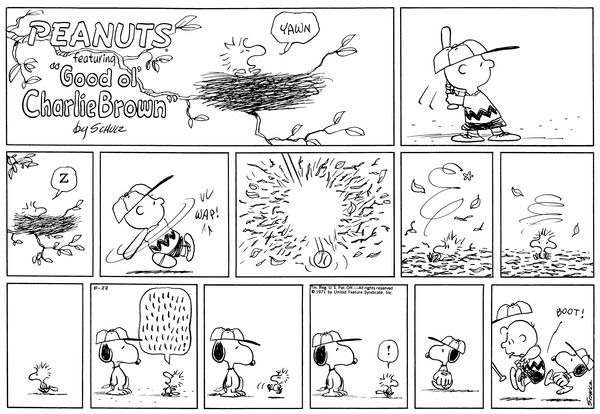
Here’s a Peanuts Sunday page. It consists of 12 panels.
Here’s the same strip done in four panels, like a daily strip.
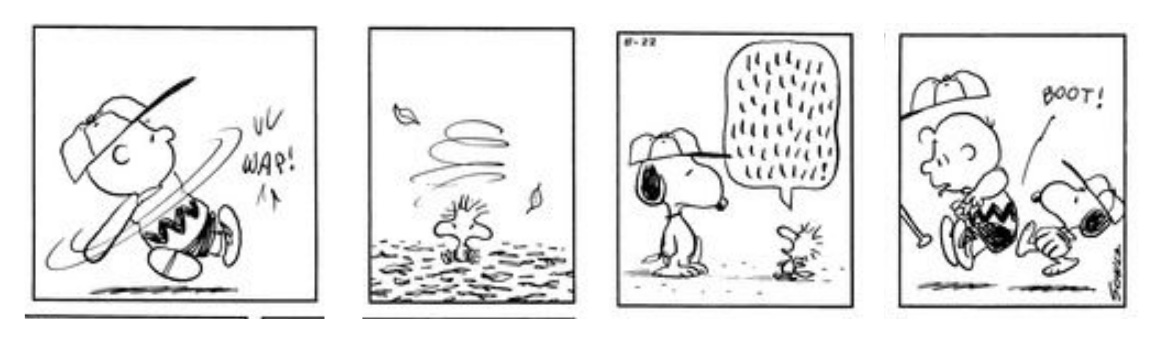
What’s missing when I shortened it? Part of the setup—we aren’t quite sure where Woodstock is, and thus we don’t know exactly what happened in between the first and second panel. We don’t know that Snoopy and Woodstock have walk to a different place to do what they do. But overall, it still works.
But the real problem is the pacing. The action happens too quickly for us to really grasp what happened. It becomes funnier because the time between what happens and the gag takes just a little bit longer. It’s a more developed gag in the Sunday as we watch Woodstock and Snoopy walk from place to place, wondering where they are going and how they will react.
How to Control Pacing
One of the ways that comics artists can control the pacing of their work is by adding more panels. But it doesn’t just slow time down to create suspense — it can often provide more details about the environment, the reactions of the characters, the importance of the scene.
Here are four ways that comic artists can control pacing to increase drama, suspense, and impact:
1. Add More Panels
More panels = slower moment.
Fewer panels = faster moment.
2. Repeat Panels
Show the same picture with tiny changes (eyes moving, a hand reaching).
This stretches out a moment. Speed things up by removing panels
3. Close-Ups
Zooming in on a face or object slows the scene and adds tension.
4. Motionless Panels
A panel with no words — or little happening — creates a pause.
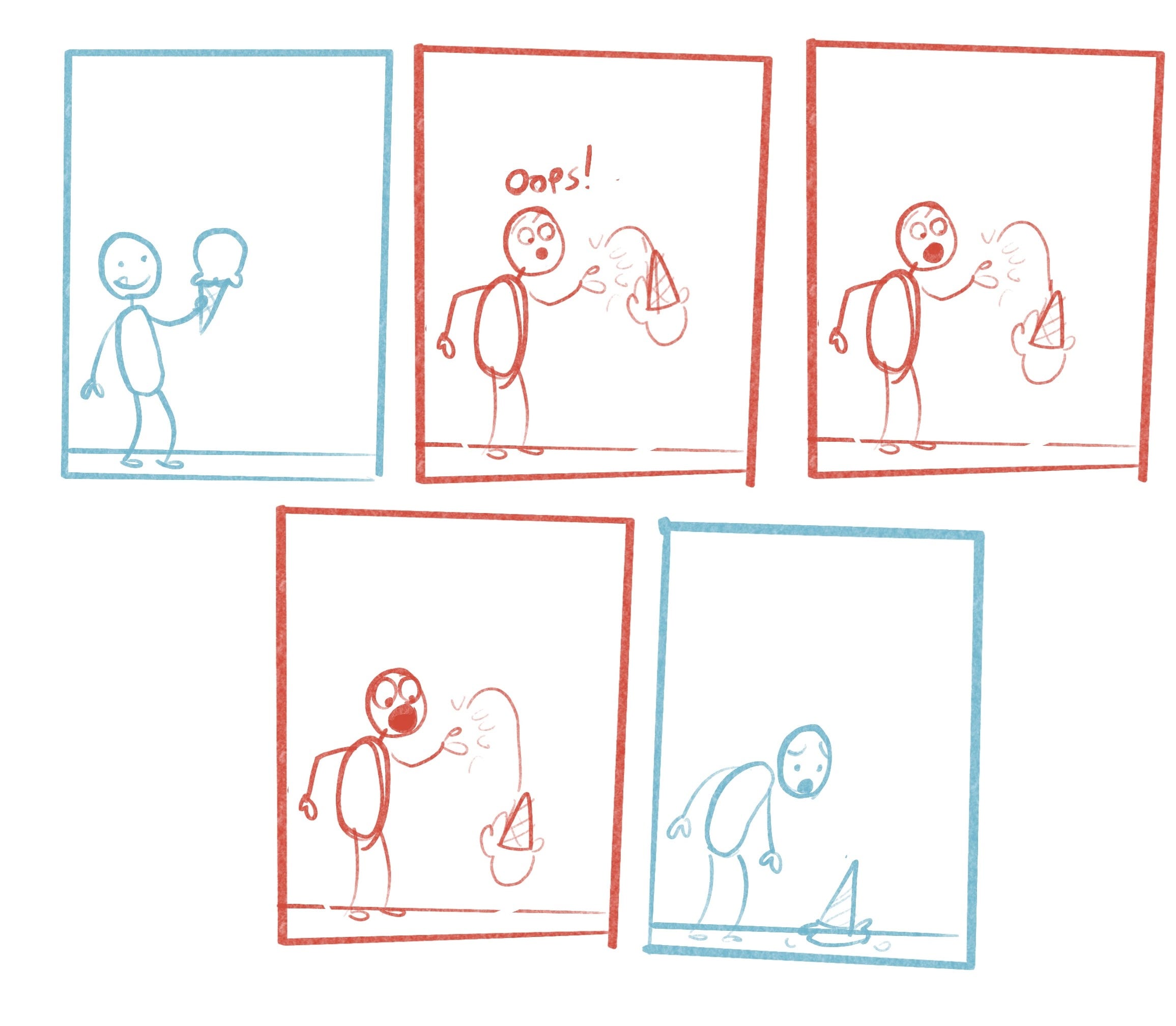
Here’s an example of these methods in action. Here’s a simple two panel comic I drew. Just set up and reaction. We fill in the gaps between the panels and assume that the character —let’s call him Norman—dropped his ice cream cone on accident.
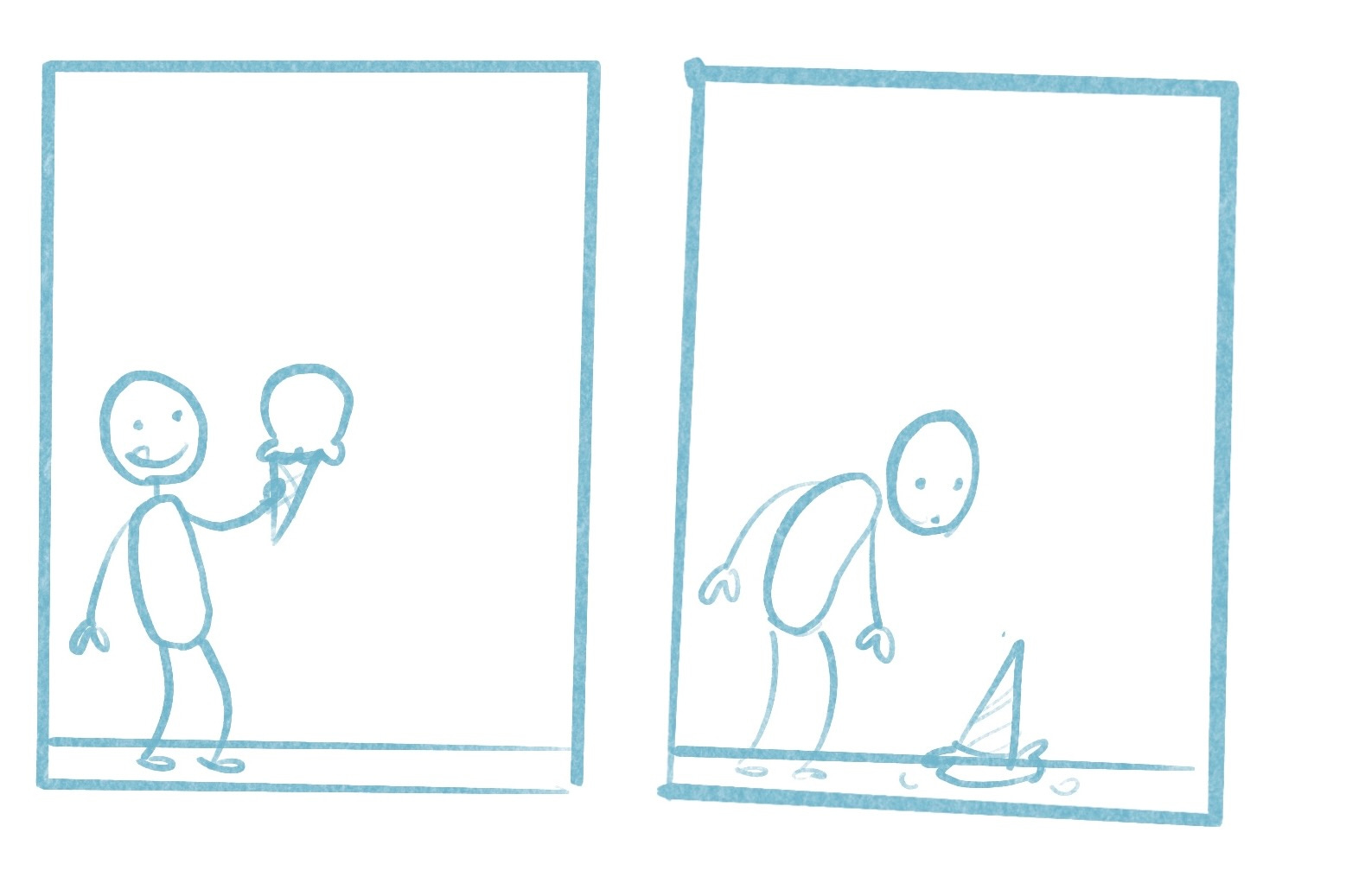
Here’s the same scene with extra panels added to draw out the action. The cone drops ever so slowly. Norman’s reaction gets more extreme. The only thing that’s changed is Norman’s face and the position of the cone. There’s no way this action would take this much time in real life, but the added panels increase the drama and suspense. We’ve all seen this in movies and commercials—something like a glass of milk starts to fall off of a table and a mom yells “NOOOOOOOOO!” while trying to get there in slow motion to avoid the spill.
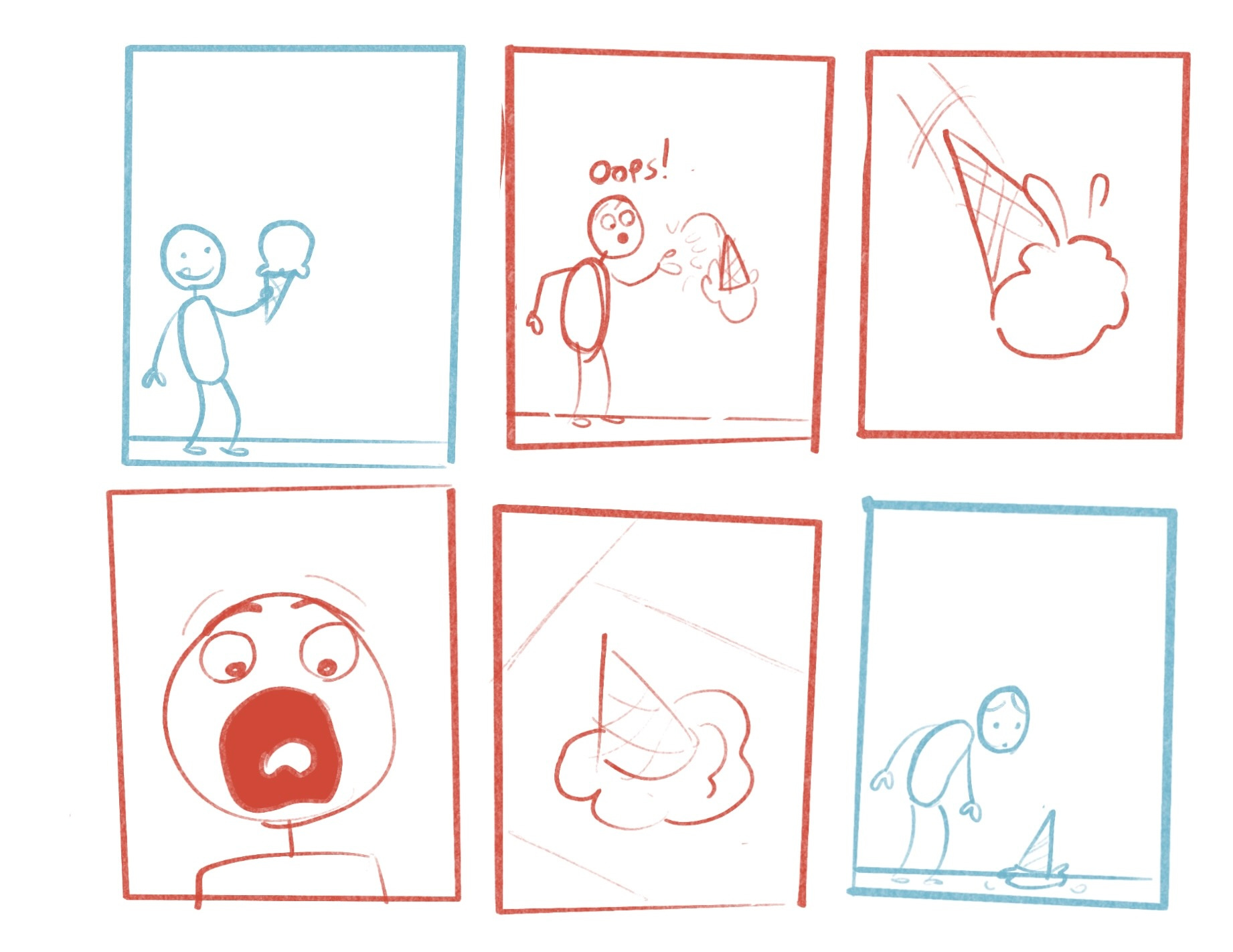
Here’s the same scene, but this time, I’ve retained one panel from the previous one and added panels of closeups. The action is slowed down again, but this one feels more dramatic and action packed, with cuts to show a close-up of Norman’s face and the cone dropping to the ground. It feels more comic like—this is what comics are good at doing. We get more of a sense of Norman’s emotions, and experience the tragedy more deeply.
Teaching pacing in a comics class
I teach a comics class called “Comics Without Words” to 3-5 grade kids, and we worked on pacing this week. All you need to do this activity is 8 index cards and a few scenarios for kids to work with, like someone opening a present, or someone letting a balloon go, if they can’t come up with their own.
They start by drawing a simple two panel comic on two index cards: a setup on one card and reaction on the other. For example a kid opens a present, then sees what’s inside.
Then, they use the remaining six cards to slow down the action using the strategies above, which I give them on a handout.
You have to be careful that they don’t create a longer story. For example, with Norman, they can’t have him buying the cone first, or going to buy another cone after he drops the first one. The idea is to work within the first two panels, and stretch out the action.
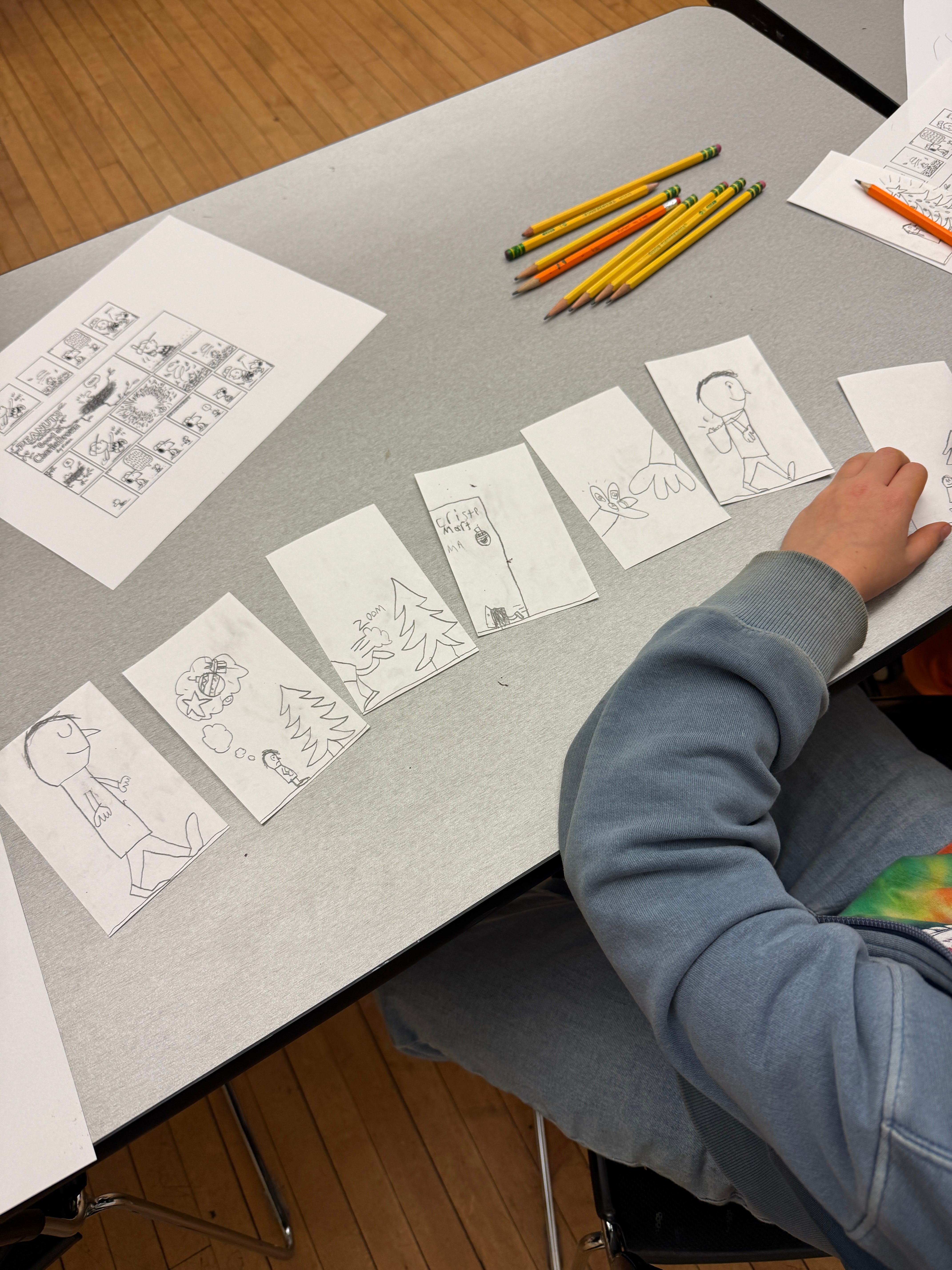
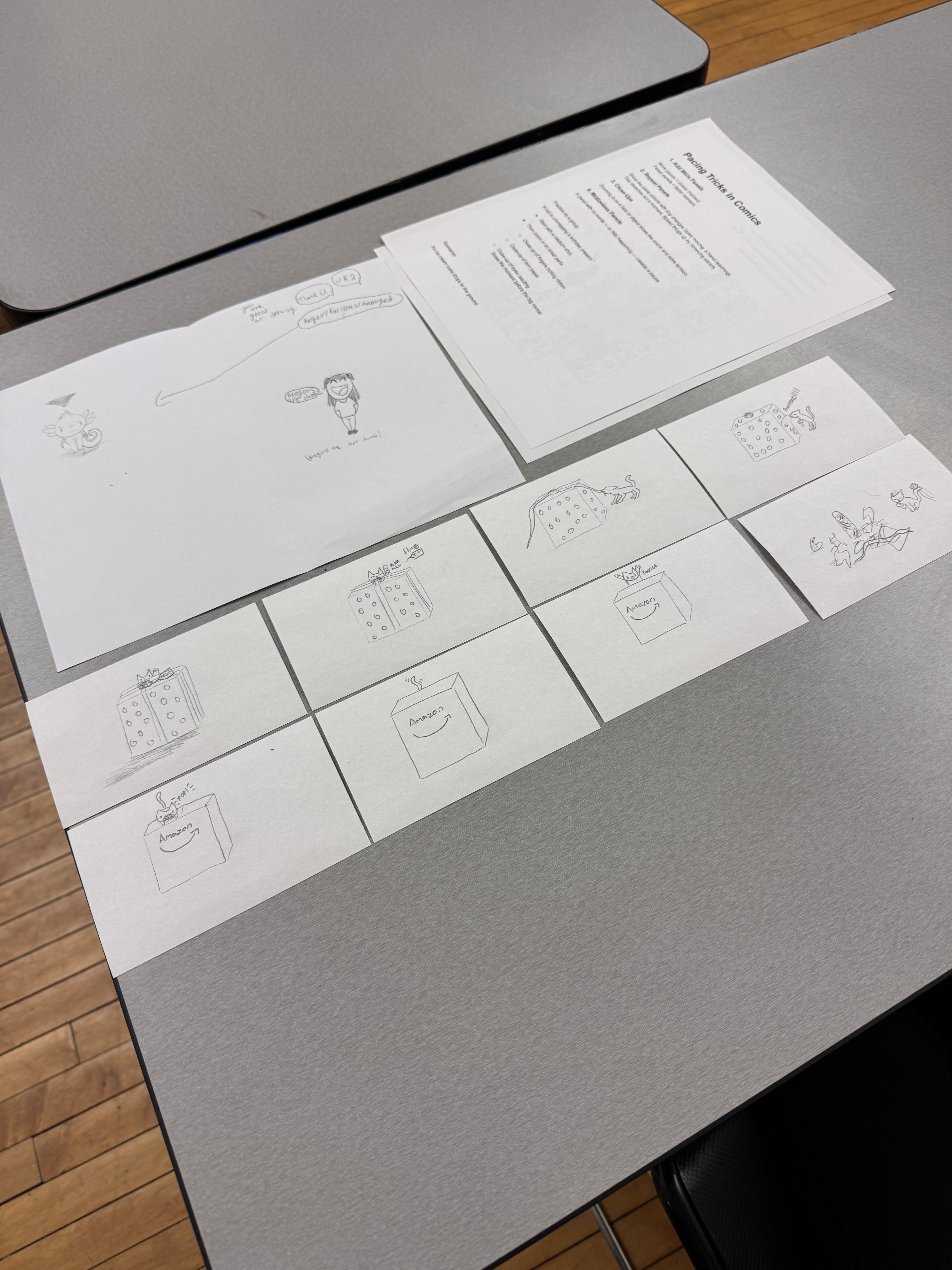
Here are some examples of my students at work. They did a great job!
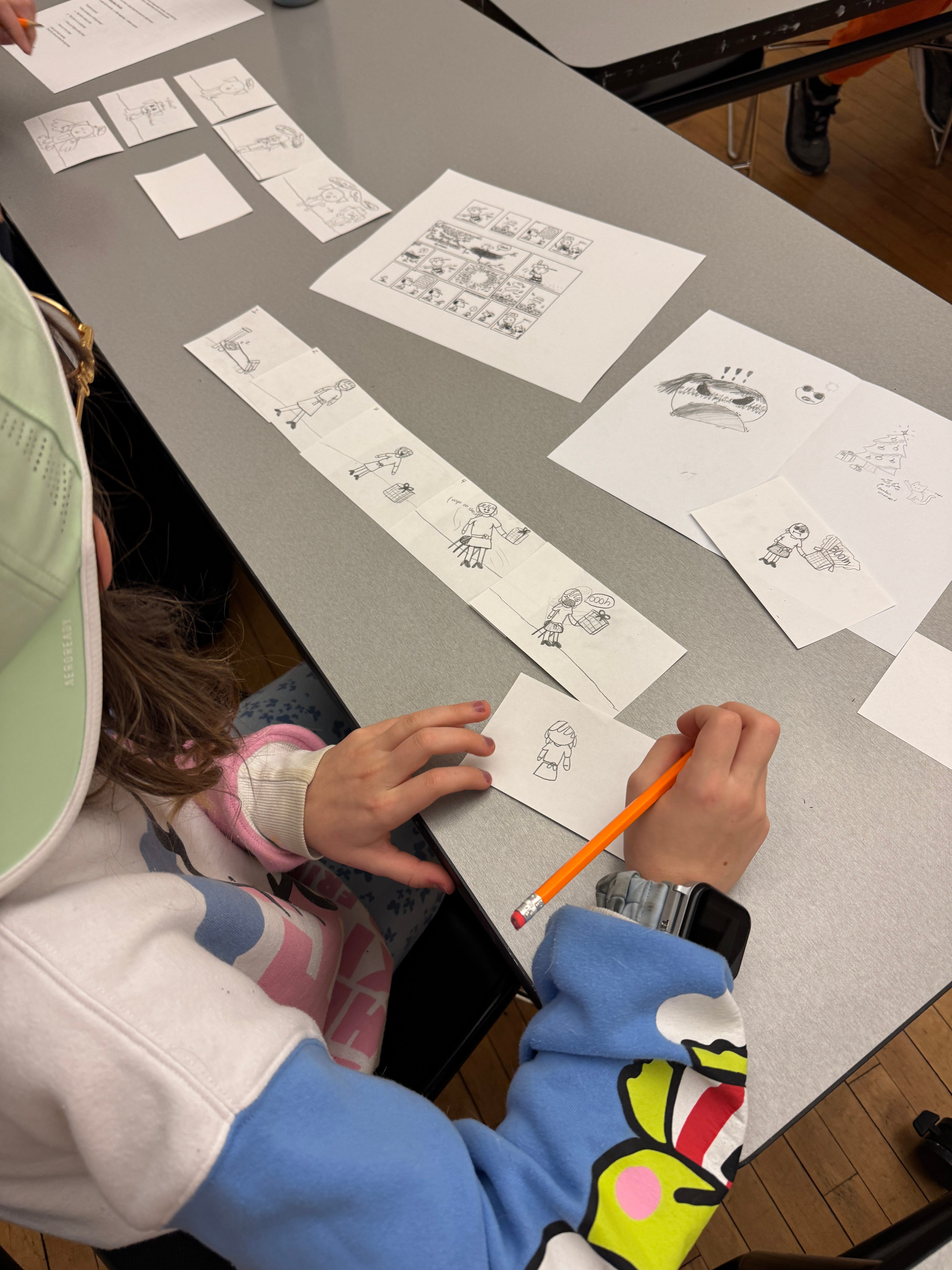
I especially like the details in the comic below. I told her to make it look more like a package, and she came up with the brilliant idea of the Amazon box. For who hasn’t received a present wrapped in the box it was delivered in?
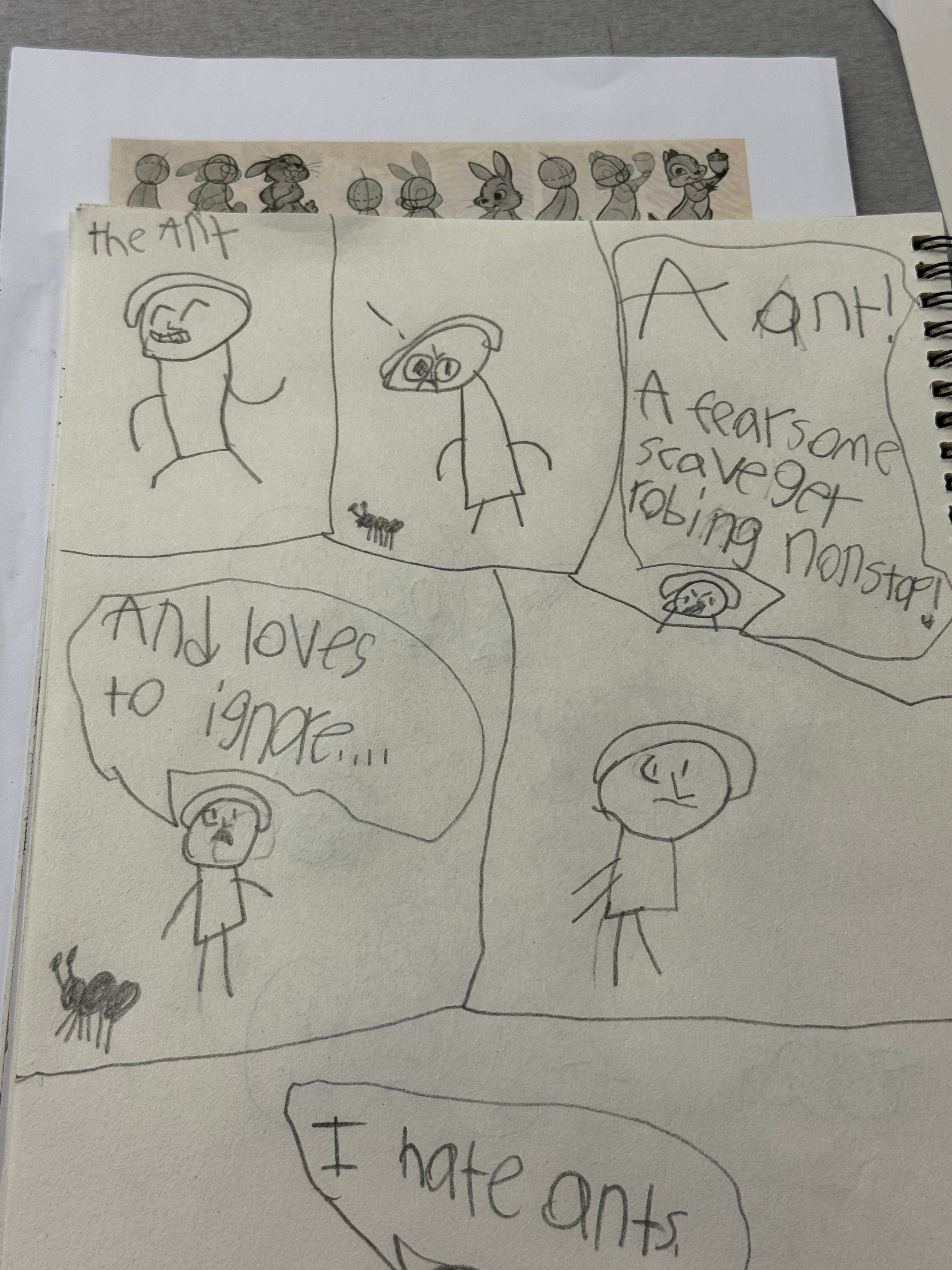
Finally, I wanted to share this comic that was created by a third grade student in my summer workshop. Look at his amazing grasp of pacing at such an early age! That fourth panel is doing a lot of work giving a brief pause for the joke to land. This kid will have a great career in comics!
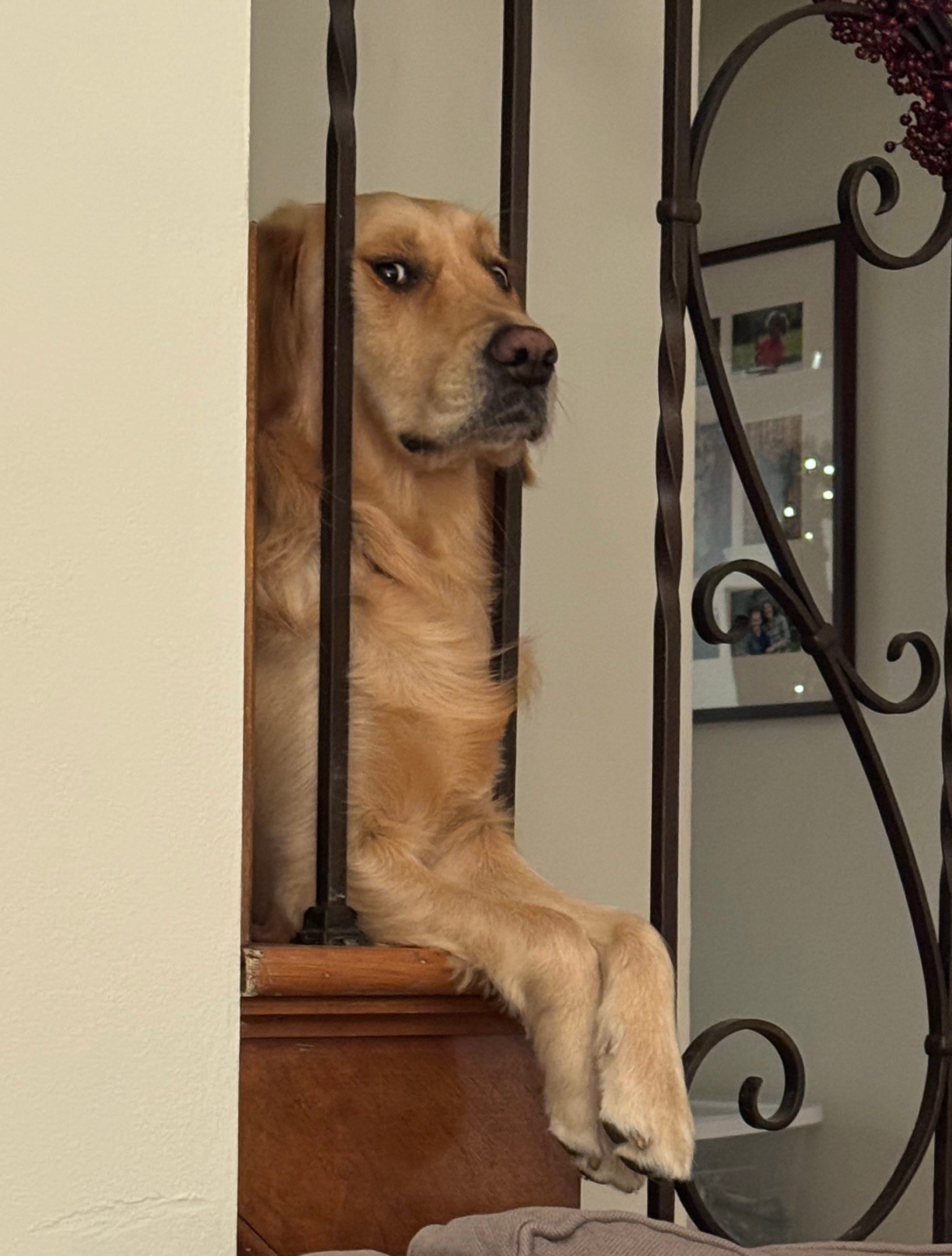
Finally, here’s the usual pic of my dog Bennet, looking out through the front window to see when my daughter comes home.
Hey! If you are a free subscriber, maybe consider getting a monthly subscription to support my work!